
Predictive Justice and AI: When Algorithms Enter the Courtroom

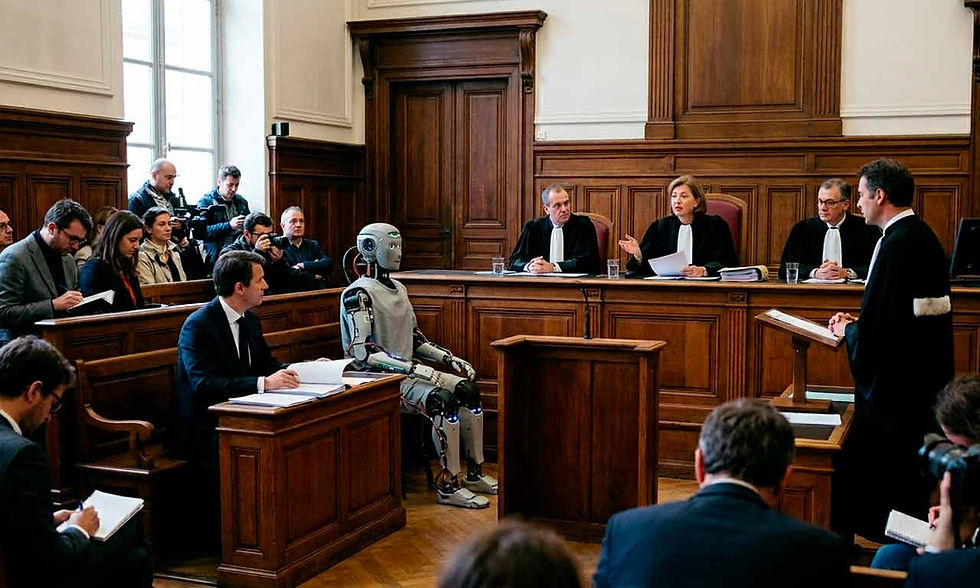
A human judge can get it wrong. So can an algorithm, just not in the same way. Predictive justice refers to the family of AI-driven tools that attempt to forecast judicial outcomes: the likelihood that a defendant will reoffend, the probable outcome of a trial, the size of a compensation award. In theory, the pitch is appealing, more consistent rulings, less vulnerable to a judge's fatigue or to disparities between jurisdictions. In practice, it's a lot messier. The United States has been running this experiment at scale since the early 2000s, with results that triggered one of the decade's fiercest ethical debates. France moved cautiously, then largely retreated. Europe, meanwhile, is now trying to build guardrails before the technology outruns them. Here's a close look at a subject that touches something foundational to any society: the power to judge, and to be judged.

In Short
Predictive justice covers AI tools that forecast judicial outcomes, recidivism risk, trial outcomes, compensation amounts, by mining massive volumes of case-law data.
COMPAS, the algorithm used across the US to score reoffending risk, was accused by ProPublica in 2016 of flagging Black defendants as high-risk at nearly twice the rate of white defendants, a finding the Wisconsin Supreme Court later grappled with directly in State v. Loomis.
France's law of March 23, 2019 bans profiling judges for predictive purposes, and DataJust, a government project to algorithmically standardize personal-injury payouts, was scrapped in January 2022 after proving too complex to build safely.
The EU AI Act (in force since August 1, 2024) classifies predictive-justice systems as "high-risk," with strict transparency and human-oversight requirements becoming fully applicable from August 2, 2026.
The real fight is between two visions of the technology: AI as a decision-support tool that could reduce unequal treatment, versus AI that risks automating yesterday's injustices and dressing them up in a lab coat.
Predictive Justice: What Are We Actually Talking About?
The term surfaced in the 2010s, somewhere between law school hallways and legaltech startups, but the underlying practice is older. American judges have long leaned on "risk grids" to guide bail and sentencing decisions. AI didn't invent this. It industrialized it.
Two very different uses tend to get lumped together under "predictive justice." The first, the more common one in Europe, is predictive case-law analysis: tools like Predictice or Case Law Analytics let lawyers mine thousands of past rulings to estimate their odds of winning, the likely compensation range, or how a given court tends to rule. This is strategic advice, not automated decision-making. Law firms and in-house legal teams now run these tools daily to game out litigation outcomes.
The second use is far more sensitive: behavioral prediction, trying to gauge whether a specific individual is likely to commit a crime or reoffend. This is where the debate catches fire. Not because risk assessment itself is absurd (criminology has done some version of it for decades), but because handing the job to an AI system means a machine's output now has direct consequences for someone's liberty. If the underlying mechanics, how a model actually learns from historical data, feel unfamiliar, our breakdown of supervised, unsupervised, and reinforcement learning covers exactly that.
By 2025, predictive justice had become a genuine fixture of the French legal landscape: law firms and corporate legal departments now use these algorithmic tools routinely to anticipate court rulings. But that widespread adoption in civil and commercial disputes sits in sharp contrast with persistent wariness in criminal law.
COMPAS: The Algorithm That Lit the Fuse
To understand why predictive justice draws so much suspicion, you have to go back to COMPAS. Short for Correctional Offender Management Profiling for Alternative Sanctions, the tool was built by the American company Northpointe and rolled out across numerous US courts to assign defendants a recidivism-risk score. That score feeds directly into decisions on pretrial detention, parole, and sometimes sentencing.
In 2016, the investigative newsroom ProPublica published an analysis of the tool's real-world track record. The findings were damning: Overall, Northpointe’s assessment tool correctly predicts recidivism 61 percent of the time. But blacks are almost twice as likely as whites to be labeled a higher risk but not actually re-offend. It makes the opposite mistake among whites: They are much more likely than blacks to be labeled lower risk but go on to commit other crimes. (Source: ProPublica analysis of data from Broward County, Fla.)
This wasn't just statistical noise, it exposed a core ethical question: can a tool be called "fair on average" if its errors fall disproportionately on the same group every time? Researchers at Pennsylvania State University later ran a causal analysis of the COMPAS dataset and concluded the algorithm shows measurable racial bias against Black defendants. We go deeper into how AI systems can amplify discrimination in our piece on generative AI's invisible dangers and their victims.
The following year, the Wisconsin Supreme Court weighed in directly. In State v. Loomis, a defendant who had pleaded guilty to fleeing an officer and operating a vehicle without consent challenged his sentence after the circuit court referenced a COMPAS risk assessment to deny him probation. He argued that relying on a secret, proprietary algorithm violated his right to due process, as neither he nor the court could inspect how the score was calculated. The Supreme Court affirmed the decision, holding that considering COMPAS alongside other traditional sentencing factors—and read-in charges—did not violate due process or constitute an abuse of discretion. However, the court placed strict limits on its future use: COMPAS could only inform a sentence, never determine it alone, and any presentence report using it had to carry an explicit written warning detailing the tool’s inherent limitations. The ruling didn’t resolve the underlying tension between trade secrets and constitutional rights; it merely formalized the compromise the American legal system has lived with ever since.

France and Its Uneasy Relationship with Judicial Algorithms
France watched the American experience with a mix of fascination and alarm. It wanted its own tools, and ultimately backed away from the most ambitious one.
Start with what the law actually locked down. Article 33 of Law No. 2019-222 of March 23, 2019 states that identity data belonging to judges and court clerks cannot be reused for the purpose of evaluating, analyzing, comparing, or predicting their real or presumed professional conduct. Violating the ban carries criminal penalties under the French penal code. In plain terms: it's illegal in France to use judges' identity data to build predictive profiles of how they rule.
That's precisely the large-scale judge-profiling the March 2019 law was designed to prevent. English-language legal press covering the story at the time flagged it as the first ban of its kind anywhere in the world. The logic was straightforward: if any legaltech vendor can flag that a given judge, sitting in a given chamber, tends to hand down harsher sentences to repeat offenders, the best-resourced law firms could shop for favorable courtrooms and steer their filings accordingly, a direct hit to the principle of equal treatment before the law.
Then came DataJust. In March 2020, in the middle of France's first COVID lockdown, the government authorized by decree the creation of an algorithm meant to build a reference scale for personal-injury compensation. The logic made sense: award amounts for comparable injuries varied wildly from one court to another. The stated goal was an official, AI-based compensation benchmark that would inform accident victims and give judges a decision-support tool for estimating damages.
Just after France's highest administrative court, the Conseil d'État, rejected a legal challenge and cleared the project to proceed, the Ministry of Justice pulled the plug on DataJust's in-house development, citing the sheer complexity of the undertaking.
France didn't abandon DataJust on principle. It couldn't pull it off, not with the resources and data structure available at the time. Those are two very different things, and it says something real about how hard these tools are to build safely, well beyond the pitch decks of legaltech startups.
Algorithmic Bias: A Structural Problem
COMPAS wasn't an isolated American mishap. It illustrates a structural issue that applies to any machine-learning system layered onto human decisions: confirmation bias at industrial scale.
A judicial algorithm learns from past rulings. Those rulings were handed down inside a specific social, economic, and racial context. If the training data shows a given population overrepresented in convictions, the algorithm reads that overrepresentation as a predictive signal, not as an artifact of a discriminatory history. It reproduces the pattern, amplifies it, and, worst of all, lends it the appearance of mathematical legitimacy.
France's Court of Cassation flagged this exact risk in its 2024 annual report, warning of a creeping "mechanization of justice" even while acknowledging the real efficiency gains these tools deliver.
Then there's the black-box problem. Most commercial judicial-prediction algorithms operate without judges, or defendants, ever seeing the reasoning behind a given score. How do you contest a ruling partly shaped by a number whose origin you can't inspect? The right to an effective remedy becomes theoretical when your opponent is an opaque algorithm.
Accountability gets sharper here too: who's responsible for a wrong decision shaped by an algorithmic recommendation? The judge remains, formally, the author of the ruling, but their discretion can shrink considerably under the persuasive weight of a number on a screen.
These questions connect to a wider debate about the risks AI and automation pose in high-stakes, human-facing sectors, something we cover in AI and automation: what are the real risks for our society. Justice isn't a special case. If anything, it might be the sharpest one.

What Europe Is Trying to Build
Two structural texts matter here.
The first is the CEPEJ's European Ethical Charter*, adopted in December 2018 by the Council of Europe's Commission for the Efficiency of Justice, the first European text laying out ethical principles for AI use in judicial systems, designed to guide policymakers, legal practitioners, and justice professionals.
The Charter rests on five core principles:
Principle of respect of fundamental rights: ensuring that the design and implementation of artificial intelligence tools and services are compatible with fundamental rights;
Principle of non-discrimination: specifically preventing the development or intensification of any discrimination between individuals or groups of individuals;
Principle of quality and security: with regard to the processing of judicial decisions and data, using certified sources and intangible data with models conceived in a multi-disciplinary manner, in a secure technological environment;
Principle of transparency, impartiality and fairness: making data processing methods accessible and understandable, authorising external audits;
Principle “under user control”: precluding a prescriptive approach and ensuring that users are informed actors and in control of their choices.*
The second text carries considerably more weight. The EU AI Act, Regulation (EU) 2024/1689, entered into force on August 1, 2024. Its rules governing high-risk AI systems become fully applicable from August 2, 2026, and that includes the administration of justice.
In practice, systems classified "high-risk" face strict obligations: technical documentation, conformity assessment, mandatory human oversight, and logging of decisions. This is a transparency-and-control mandate, not a ban, and that distinction matters.
Legal liability remains largely unresolved: who answers when the algorithm gets it wrong? The software developer? The institution that deployed it? The judge who followed the recommendation without questioning it?
Can We Trust an AI to Judge?
The short answer: not alone, and probably never. The longer answer is more nuanced.
It would be intellectually dishonest to pretend humans judge without bias of their own. Cognitive-science research has shown that judicial rulings shift depending on the time of day, the order cases are heard in, or the ambient emotional context of the courtroom.
But human fallibility has a property AI doesn't yet share: it can be questioned, challenged, explained. A judge can walk through their reasoning, revisit a ruling, respond to a counter-argument. They carry a moral accountability no one has yet figured out how to pin on a machine.
France's Court of Cassation published a methodological note in March 2024 on what it called "reasoning in the age of predictive algorithms," urging judges to spell out their legal reasoning explicitly.
How predictive tools actually get used varies enormously by area of law: heavy adoption in commercial and administrative disputes, sharply limited use in criminal cases, where individualized sentencing still matters most.
That distinction is the whole ballgame. Using AI to estimate the likely statistical payout in a commercial dispute is just another decision-support tool. Folding it into a criminal ruling that touches someone's liberty is an entirely different proposition.
What most legal scholars and practitioners converge on is a model where AI is a copilot, never the pilot. The algorithm can inform, flag inconsistencies, speed up case-law research, but the final call has to stay human, reasoned, and contestable. That's not a conservative instinct. It's a precondition for justice retaining any legitimacy at all. If you're curious how far this kind of cognitive outsourcing can go before it costs us something, we've examined the broader question in is AI making us dumber?
Looking Ahead
The predictive-justice debate connects to questions running through our entire relationship with AI: who decides, on what authority, and with what margin of error we're willing to accept? None of these questions has a clean answer. But they deserve to be asked in public, before the algorithms become facts on the ground nobody remembers agreeing to. For a broader view of where this is all heading, see our deep dive on AI by 2040.
FAQ
What is predictive justice?
Predictive justice refers to the use of AI algorithms to forecast judicial outcomes, whether that's a defendant's likelihood of reoffending, the probable outcome of a trial, or the size of a compensation award. These tools mine thousands of past rulings to extract statistical patterns.
Is predictive justice legal in France?
Partially. Predictive case-law analysis, mining past rulings to shape legal strategy, is legal. But the March 23, 2019 law explicitly bans profiling judges for the purpose of analyzing or predicting their professional conduct. Violations carry criminal penalties.
Is the COMPAS algorithm still in use?
Yes. Recidivism risk-assessment tools remain in use across many US states, in various forms. The 2016 ProPublica controversy fueled public debate and prompted some reforms, and the Wisconsin Supreme Court's 2016 ruling in State v. Loomis upheld their use under specific safeguards, but it didn't end their deployment.
What does the EU AI Act say about predictive justice?
The EU AI Act (Regulation (EU) 2024/1689), in force since August 1, 2024, classifies predictive-justice systems as "high-risk." That triggers strict requirements: algorithmic transparency, human oversight, technical documentation, and conformity assessment. Predictive policing systems that target specific individuals are banned outright.
Why was the DataJust project abandoned?
France's Ministry of Justice launched DataJust in 2020 to standardize personal-injury compensation. It was scrapped in January 2022, before its planned testing period even concluded, due to the technical complexity of the project, including the near-impossibility of fully automating case-law data extraction, and insufficient resources to prevent algorithmic bias.
Can AI replace a judge?
No, not in any current or foreseeable legal system. The expert consensus is that AI should remain a decision-support tool: it can analyze, flag, and compare, but the final ruling has to belong to a human who can justify it and answer for it. That's both an ethical and a legal requirement.
What are the biggest risks of judicial algorithms?
Three keep coming up: algorithmic bias (reproducing and amplifying historical discrimination), model opacity (making the reasoning behind a score impossible to inspect or contest), and creeping delegation (algorithmic recommendations tend to harden into decisions in practice, even when officially meant to be advisory only).


Comments